

Cyber Threat
Intelligence (CTI)
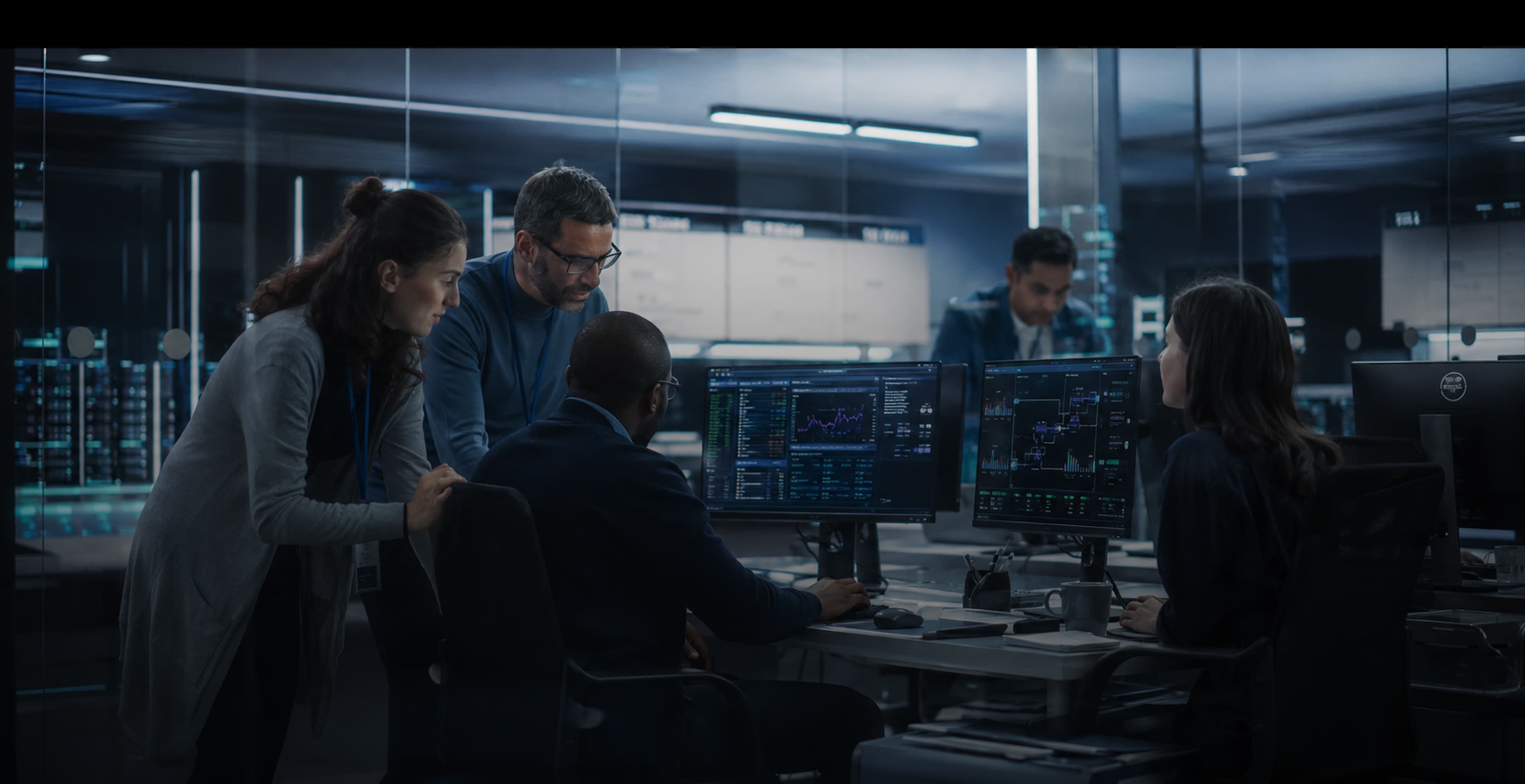
Turning Threat Signals into Actionable Intelligence
By connecting scattered threat signals, we create the threat intelligence an organization needs
From Signals to Intelligence
Cyber Threat Intelligence (CTI) filters and connects the threat signals relevant to your organization, analyzing real impact and likelihood of attack. It clarifies which threats matter most and delivers the intelligence behind fast, accurate decisions.

Too Many Signals,
Not Enough Decision Context
More Signals Than Ever, Less Clarity Than Ever
Signal Overload, Low Relevance
- A vast amount of threat information, IoCs, and attacker trends is generated every day, but it is difficult to quickly single out the threats actually relevant to an organization.
- A framework is needed that prioritizes the threats connected to an organization's assets, accounts, brand, and industry characteristics, and organizes them into information that can be acted on.
Gap between Threat Contexts
- Even when a new attack group, vulnerability, or leaked information is discovered, it is difficult to immediately grasp how it relates to an organization's assets and whether it could lead to actual damage.
- An organization must be able to judge the actual impact and potential attack paths by analyzing attacker activity alongside the organization's exposure points.
No Clear Priorities, Delayed Decisions
- Even the same threat information can carry a different actual risk level depending on the organization's environment, asset criticality, and business impact.
- Instead of handling all threats the same way, clear response priorities must be set by comprehensively considering exploitability and impact on core assets.
Relevant Intelligence, Prioritized Response
Identifying Threats Relevant to Your Organization, and Responding by Priority
What is Cyber Threat Intelligence?
Cyber threat intelligence (CTI) is the activity of collecting and analyzing diverse threat information to understand potential threats and support security decision-making and response. S2W CTI integrates and analyzes threat information collected from diverse channels such as the dark web, deep web, Telegram, and open sources, and by linking it with an organization's assets, industry, and attack surface, it presents practical response priorities to support faster and more effective decision-making.
Identifying Threats Relevant
to Your Organization
Amid ransomware information, IoCs, and attacker trends, it selects the threats highly relevant to an organization to reduce unnecessary noise and help focus on the important threats.
Attacker-centric Threat Analysis
Analyzing the relationships among APT group activity, TTPs, attack infrastructure, and leaked data, and connecting them to the organizational environment to provide intelligence for understanding attacker intent and attack scenarios.
Business Impact-based Prioritization
Analyzing threat indicators alongside asset criticality, external exposure status, and business impact to first identify the high-risk elements with the greatest likelihood of actual compromise and scale of damage.
Threat & Security
Intelligence Department, TALON
Cyber threats occur within an ecosystem where threat actors, attack infrastructure, malware, and leaked data are interconnected in complex ways. Based on diverse sources such as the dark web, Telegram, and threat data, S2W continuously researches and analyzes threat actors and attack activity to produce intelligence usable for detection and response.
APT Group Analysis
& Tracking
Challenge
Advanced APT groups operate over long periods while continuously changing their infrastructure, malware, and attack techniques, so a single event or individual IoC alone makes it difficult to grasp the true nature of a threat and its future activity.
Key Focus
Based on accumulated threat intelligence assets and analytical experience, S2W continuously tracks and analyzes the relationships among APT groups' attack infrastructure, malware, TTPs (Tactics, Techniques, and Procedures), and attack campaigns.
Ransomware Ecosystem
Monitoring
Challenge
Ransomware groups use leak sites, negotiation channels, and dark web communities to continuously publicize and expand their attack activity. Because their targets, tactics, and operating methods change rapidly, individual incidents or victim cases alone make it difficult to grasp the risk level and trends across the ecosystem.
Key Focus
S2W continuously monitors and analyzes ransomware groups' leak sites, disclosures of victim organizations, and negotiation-related activity. By integrating and analyzing diverse sources such as the dark web, data leak sites (DLS), negotiation channels, and Telegram, it continuously analyzes the relationships between ransomware groups, changes in targets, damage patterns by industry, and the emergence of new ransomware groups to grasp changes across the ransomware ecosystem.
IoC Discovery
& Enrichment
Challenge
Attackers continuously change their infrastructure and attack techniques to bypass existing detection frameworks. Because published IoCs or static threat information alone make it difficult to respond effectively to new threats, the latest IoCs must be continuously uncovered and analyzed.
Key Focus
Based on the dark web, telegram, threat intelligence, and attack infrastructure analysis, S2W continuously uncovers and produces new IoCs. By correlating the acquired data with threat actors, attack infrastructure, malware, and attack campaigns, it advances the data into intelligence usable for detection and response.
1/3
Comprehensive Intelligence
for Complete Operational Readiness
An all-around defense framework completed with integrated threat intelligence
Threat Intent & Account Exposure Correlation (CTI+ATO)
A leaked account can become an initial intrusion point and then lead to internal spread, information theft, and further attacks. By linking CTI with ATO analysis, S2W analyzes leaked account information, attack group activity, IoCs, and account anomalies together to gain a multidimensional grasp of an attack's background, purpose, and potential for spread.
Integrated Threat Analysis
Integrated threat analysis that links leaked accounts, IoCs, and attack group information
Attack Scenario Visualization
Attack scenario visualization that connects attackers' activity patterns with account anomalies
Impact & Priority Derivation
Deriving response priorities that reflect actual compromise impact and potential for spread
Turning Intelligence into Actionable Decisions
Amid vast amounts of threat information, an organization must judge priorities and establish an execution plan that considers asset criticality and its work environment. By linking CTI with a decision-making agent, S2W comprehensively analyzes threat information, core assets, business importance, and past response history to present response priorities and scenarios.
Risk-based priority assessment
Risk-based priority assessment that combines threat information with asset criticality
Optimal Response Scenario Proposal
Response scenario proposals that reflect the organization's environment and past response history
Automated Workflow Support
Support for an automated workflow that connects analysis results through to decision-making and response
Threat Intent & Account Exposure Correlation (CTI+ATO)
A leaked account can become an initial intrusion point and then lead to internal spread, information theft, and further attacks. By linking CTI with ATO analysis, S2W analyzes leaked account information, attack group activity, IoCs, and account anomalies together to gain a multidimensional grasp of an attack's background, purpose, and potential for spread.
Integrated Threat Analysis
Integrated threat analysis that links leaked accounts, IoCs, and attack group information
Attack Scenario Visualization
Attack scenario visualization that connects attackers' activity patterns with account anomalies
Impact & Priority Derivation
Deriving response priorities that reflect actual compromise impact and potential for spread
Turning Intelligence into Actionable Decisions
Amid vast amounts of threat information, an organization must judge priorities and establish an execution plan that considers asset criticality and its work environment. By linking CTI with a decision-making agent, S2W comprehensively analyzes threat information, core assets, business importance, and past response history to present response priorities and scenarios.
Risk-based priority assessment
Risk-based priority assessment that combines threat information with asset criticality
Optimal Response Scenario Proposal
Response scenario proposals that reflect the organization's environment and past response history
Automated Workflow Support
Support for an automated workflow that connects analysis results through to decision-making and response
1/2
Explore More
Products We Offer


What's New at S2W
See the latest press releases
S2W Contributes to INTERPOL’s African Cyberthreat Assessment Report 2026
2026.08.12
"As agentic AI raises jailbreak risk, defend by priority"
2026.07.27
"North Korean hackers combed blogs to pick out coin investors, planted malware in a "North Korea missions" folder"
2026.07.24
“Cyber threats know no borders, but responses must differ by country”
2026.07.03
