

AI Red Teaming

Building Trustworthy AI Through Adversarial Testing
Reproducing and verifying the hidden misuse paths and safeguard gaps of AI services from a real attacker's perspective
Secure AI
Before It Learns to Fail
AI Red Teaming reproduces and validates hidden misuse paths and safeguard gaps in AI services from a real attacker's perspective. It replicates scenarios including prompt injection, RAG data leakage, and AI agent abuse — verifying security vulnerabilities and policy bypass risk before launch, so AI runs safely in production.
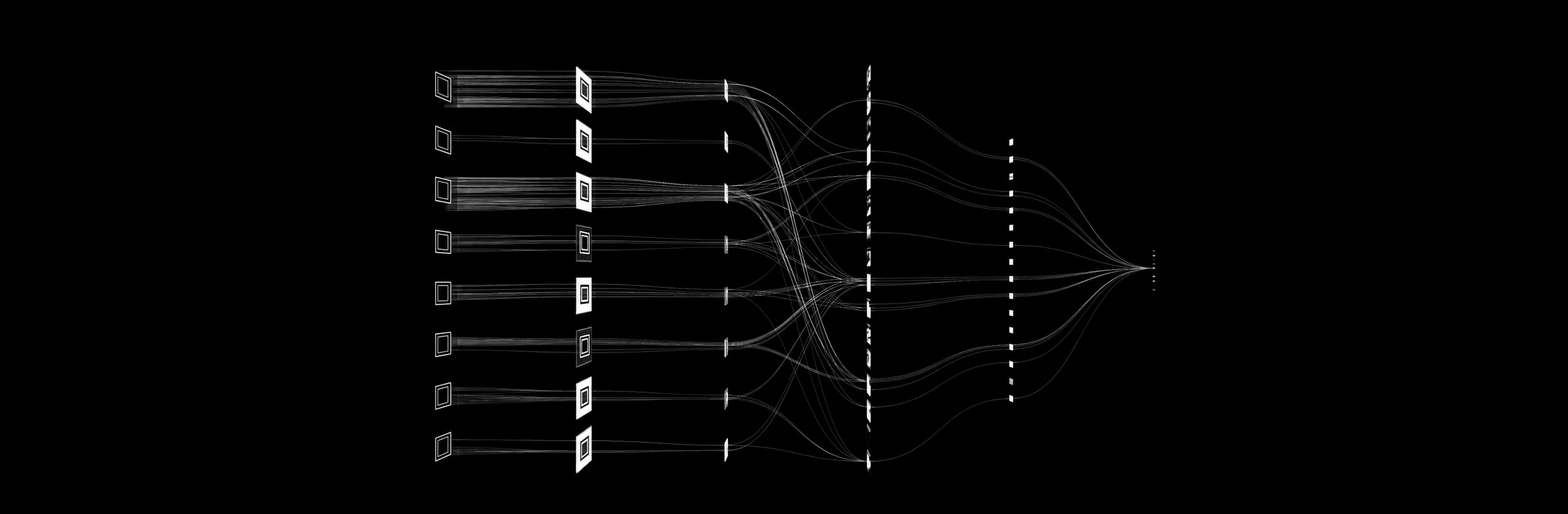
Input-to-Action AI Risks,
Untested Guardrails
Unvalidated AI Risk, From Input to Execution
Unproven Security Assurance Before AI Launch
- An internal AI service adoption or launch schedule has been set, but there is insufficient evidence to prove that safeguards work in actual misuse scenarios such as prompt manipulation or policy bypass.
- A procedure is needed that reproduces the bypass inputs actual users might attempt and confirms under what conditions policies and controls are neutralized.
RAG Access Boundaries & Response Leakage
- Document permissions have been set, but it is tricky to reliably verify that out-of-scope information is not subtly mixed in as the AI generates responses.
- The privilege boundary from retrieval through to the final response must be verified so that the content of documents the user has no access to is not exposed in summaries and sensitive information is not reconstructed in responses.
Prompt-to-Action Risk
in AI Agents
- As AI agents come to invoke APIs and business systems, a point has emerged where a single prompt leads to actual execution.
- To prepare for cases where malicious input or instructions in external documents connect to tool invocation, execution privileges, invocation conditions, approval procedures, and log tracing must all be examined together.

AI Attack Path Validation
& Guardrail Testing
Validating AI Attack Paths and Testing Safeguards
What is AI Red Teaming?
AI red teaming is a security test that verifies, from an attacker's perspective, how generative AI, LLMs, RAG, and AI agent services could be misused in an actual user environment. Examining the potential for prompt manipulation, policy bypass, sensitive information exposure, privilege misuse, and abnormal execution based on hands-on scenarios, it presents the response framework and improvement directions needed for service operation.
AI Attack Path Discovery
Analyzing the input, response, data reference, privilege handling, and external tool integration flows of AI services to identify AI-specific attack paths and high-exploitability risks that are difficult to reveal through traditional web and app assessments.
Guardrail Testing Under Adversarial Inputs
Verifying whether the security policies and safeguards applied to AI services work as designed even against malicious input and bypass attempts, and confirming control gaps that could arise before launch or during operation.
Business Impact-based AI Risk Prioritization
Analyzing the potential for AI malfunction and misuse based on technical severity and business impact to present improvement priorities for reducing the risks of personal information exposure, internal confidential information leaks, and unauthorized execution.
AI Red Teaming Validation Process
01
AI Service Scoping & Risk Mapping
- Understanding the AI model, prompts, data sources, RAG structure, API integrations, privilege system, and external tool connections
- Defining the key verification scope and priorities based on service purpose, user privileges, the sensitivity of processed data, and the operating environment
02
Scenario Design & Attack Simulation
- Designing scenarios for prompt injection, policy bypass, sensitive information elicitation, over-privileged requests, and data extraction tailored to the service's characteristics
- Applying natural language-based attack patterns and bypass techniques that actual users might input to verify the AI service's responses and processing flows
03
Exploitability Assessment & Failure Analysis
- Examining key vulnerabilities and misuse potential based on the AI service's structure and usage context
- Analyzing the causes of attack success at each scenario stage and gaps in the defense framework to derive practical improvement points
04
Guardrail Improvement
& Monitoring Criteria
- Designing the safeguards that need reinforcement—prompt policies, privilege controls, data access restrictions, and approval procedures—based on the discovered vulnerabilities and misuse paths
- Defining the risk indicators, log items, and detection criteria that must be continuously checked during AI service operation to mitigate the possibility of recurrence
05
Risk Reporting & Remediation Guidance
- Providing a report that organizes the discovered vulnerabilities and misuse potential based on technical severity and business impact
- Providing a practical guide with actionable measures such as prompt reinforcement, policy strengthening, privilege control, data access restriction, and improved logging and monitoring
Standards-based AI Validation,
Intelligence-led Scenarios
AI security validation that combines international standards with threat intelligence
Risk-based AI Security Validation
Based on international standards such as the OWASP Top 10 for LLM Applications, S2W designs the verification scope to reflect the customer's service structure, data sensitivity, privilege system, and operating environment. In particular, it distinguishes the attack surface and operational risk of each service type—LLM, RAG, and AI agent—to apply assessment criteria suited to the actual environment.
Reflecting international AI security risk standards
Applying an assessment framework that reflects international AI security risk standards
Verification framework by type
Composing verification items for each service type, such as LLM, RAG, and AI agent
Tailored Assessment Design
Designing a tailored assessment scope that reflects the service structure and data sensitivity

Threat Intelligence-led Attack Scenario Design
AI red teaming goes beyond simple prompt testing to reproduce the bypass and abuse methods of real attackers. By combining the analytical capabilities of its integrated analysis unit TALON, S2W reflects the latest attack techniques and LLM abuse payloads from the dark web, hacking forums, and threat channels in AI service assessment scenarios.
Linking the latest threat intelligence
CTI-based analysis of the latest attack techniques and threat actor TTPs
Reflecting hidden-channel LLM abuse payloads
Reflecting LLM attack payloads observed on the dark web and hacking forums
Advanced intrusion scenario design
Designing scenarios for prompt injection, policy bypass, and sensitive information elicitation
Verification of practical misuse potential
Verifying the misuse potential of AI services in a way that reflects the real threat environment

Risk-based AI Security Validation
Based on international standards such as the OWASP Top 10 for LLM Applications, S2W designs the verification scope to reflect the customer's service structure, data sensitivity, privilege system, and operating environment. In particular, it distinguishes the attack surface and operational risk of each service type—LLM, RAG, and AI agent—to apply assessment criteria suited to the actual environment.
Reflecting international AI security risk standards
Applying an assessment framework that reflects international AI security risk standards
Verification framework by type
Composing verification items for each service type, such as LLM, RAG, and AI agent
Tailored Assessment Design
Designing a tailored assessment scope that reflects the service structure and data sensitivity
Threat Intelligence-led Attack Scenario Design
AI red teaming goes beyond simple prompt testing to reproduce the bypass and abuse methods of real attackers. By combining the analytical capabilities of its integrated analysis unit TALON, S2W reflects the latest attack techniques and LLM abuse payloads from the dark web, hacking forums, and threat channels in AI service assessment scenarios.
Linking the latest threat intelligence
CTI-based analysis of the latest attack techniques and threat actor TTPs
Reflecting hidden-channel LLM abuse payloads
Reflecting LLM attack payloads observed on the dark web and hacking forums
Advanced intrusion scenario design
Designing scenarios for prompt injection, policy bypass, and sensitive information elicitation
Verification of practical misuse potential
Verifying the misuse potential of AI services in a way that reflects the real threat environment
1/2
Explore More
Products We Offer


What's New at S2W
See the latest press releases
S2W Contributes to INTERPOL’s African Cyberthreat Assessment Report 2026
2026.08.12
"As agentic AI raises jailbreak risk, defend by priority"
2026.07.27
"North Korean hackers combed blogs to pick out coin investors, planted malware in a "North Korea missions" folder"
2026.07.24
“Cyber threats know no borders, but responses must differ by country”
2026.07.03
